
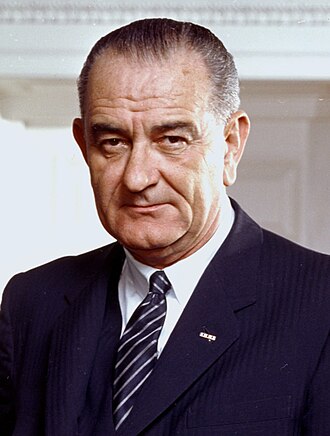
President 36 of 47
Lyndon B. Johnson
1963–1969 · Democratic · Texas
He signed the biggest civil-rights laws in a century — and sank into the Vietnam War.
- Lived
- 1908–1973
- Vice president
- None; Hubert Humphrey
- Nickname
- LBJ
- Home state
- Texas
“We shall overcome.”
The story
Lyndon Baines Johnson — people called him LBJ — was a towering Democrat from Texas who belonged to the Democratic Party. He even named his daughters and dogs with those letters. He had been Senate majority leader, a master vote-counter, before he was vice president. After President Kennedy was killed in Dallas, Johnson was sworn in as president aboard Air Force One, with Jacqueline Kennedy beside him. He served from 1963 to 1969: he finished Kennedy's term and won a full term of his own in 1964.
Johnson knew how to pass laws. The Civil Rights Act of 1964 banned segregation in public places and jobs. The Voting Rights Act of 1965 was meant to protect the right to vote, especially where officials had blocked it. After the Selma marches, he asked Congress to make the Constitution's promise of the ballot real. Those two laws are landmark American statutes — passed by Congress, signed by a president — that enforced equal rights under the Constitution. Republicans in Congress provided crucial votes to pass the Civil Rights Act. The 24th Amendment, during his presidency, banned poll taxes in federal elections. The Immigration and Nationality Act of 1965 ended the old national-origins quota system.
His domestic program was called the Great Society. Medicare, which he signed, mainly helps older Americans pay for health care. Medicaid, passed with it in 1965, helps many Americans with low incomes. But on his watch U.S. involvement in Vietnam grew into a long, costly war. He poured in more troops after the Gulf of Tonkin. Thousands of Americans died, and the war still was not won. The Tet Offensive of 1968 was a shock that showed the war was not nearly over. In 1968 he announced he would not run for another term. Vietnam had broken his presidency.
Why it matters
A president can change daily life with laws — and lose the public over a faraway war. Johnson's mixed record is great laws at home, and a war in Vietnam that went badly.
Check for understanding
20 questions from the lesson above. Misses come with a short explanation — then the lesson is yours.
Question 1 of 20
0 correct